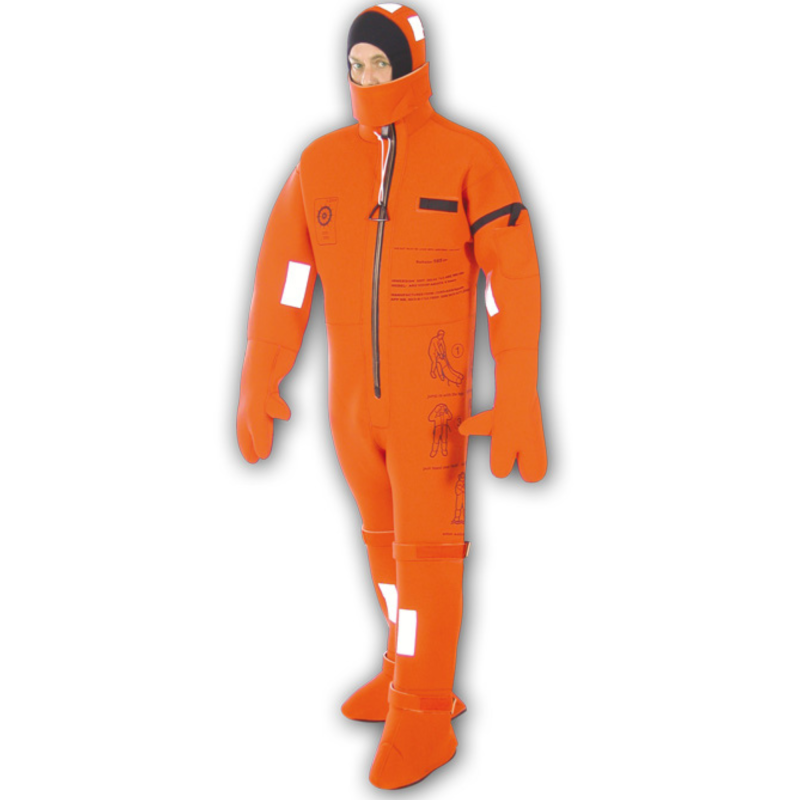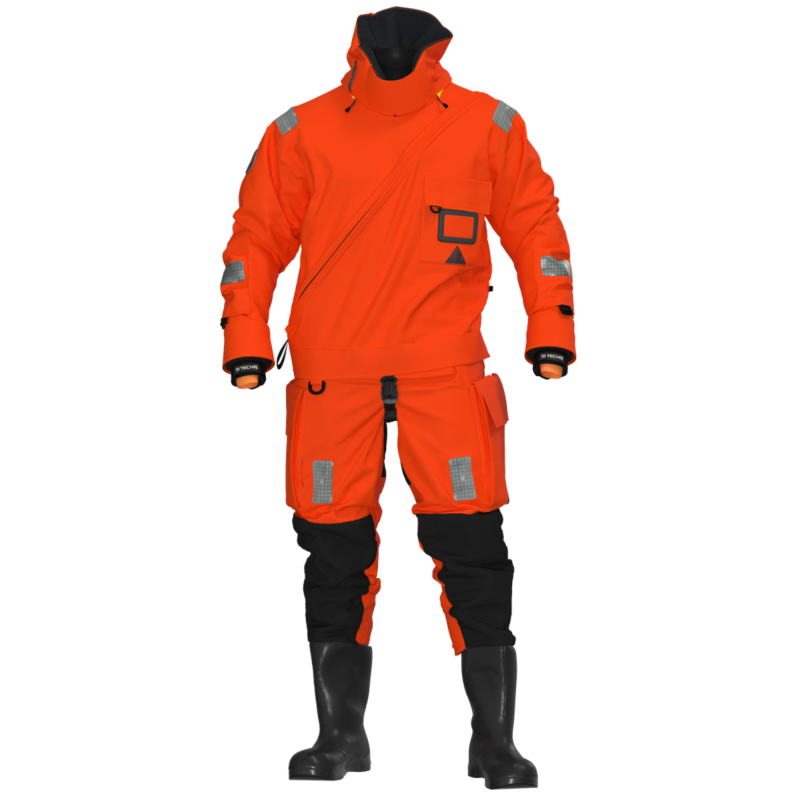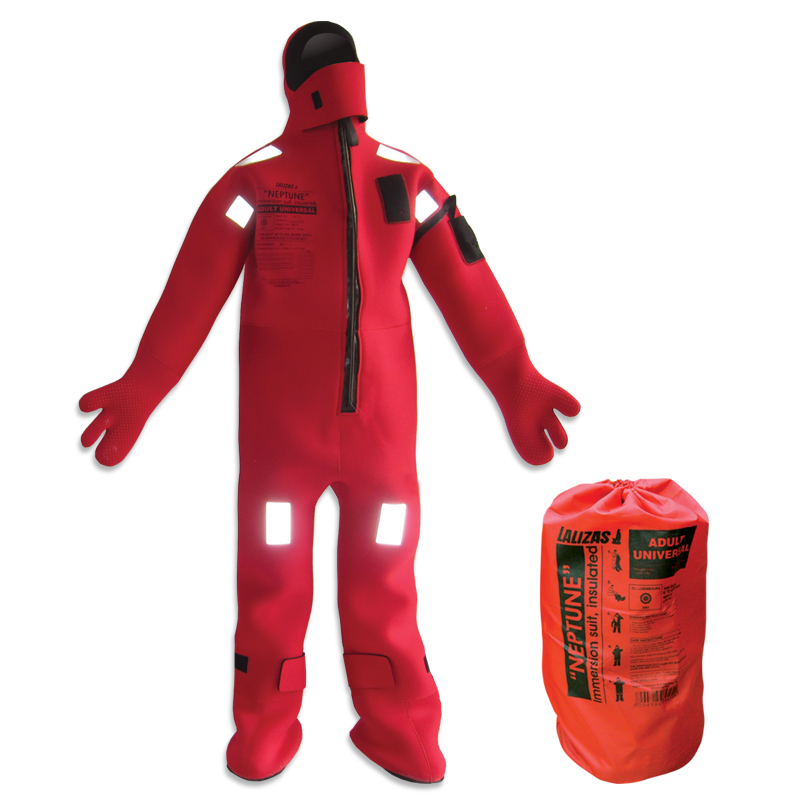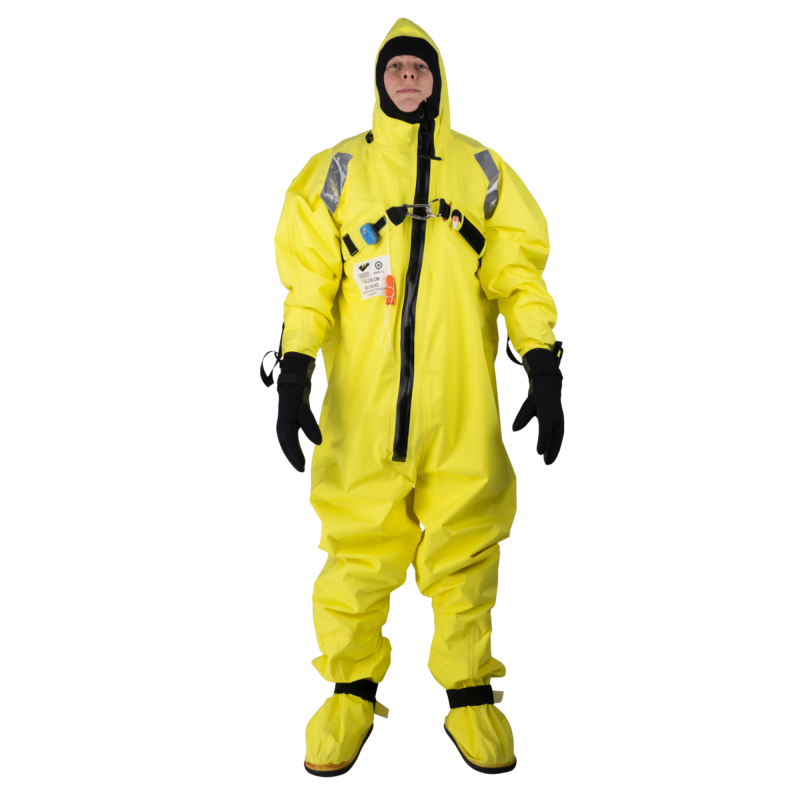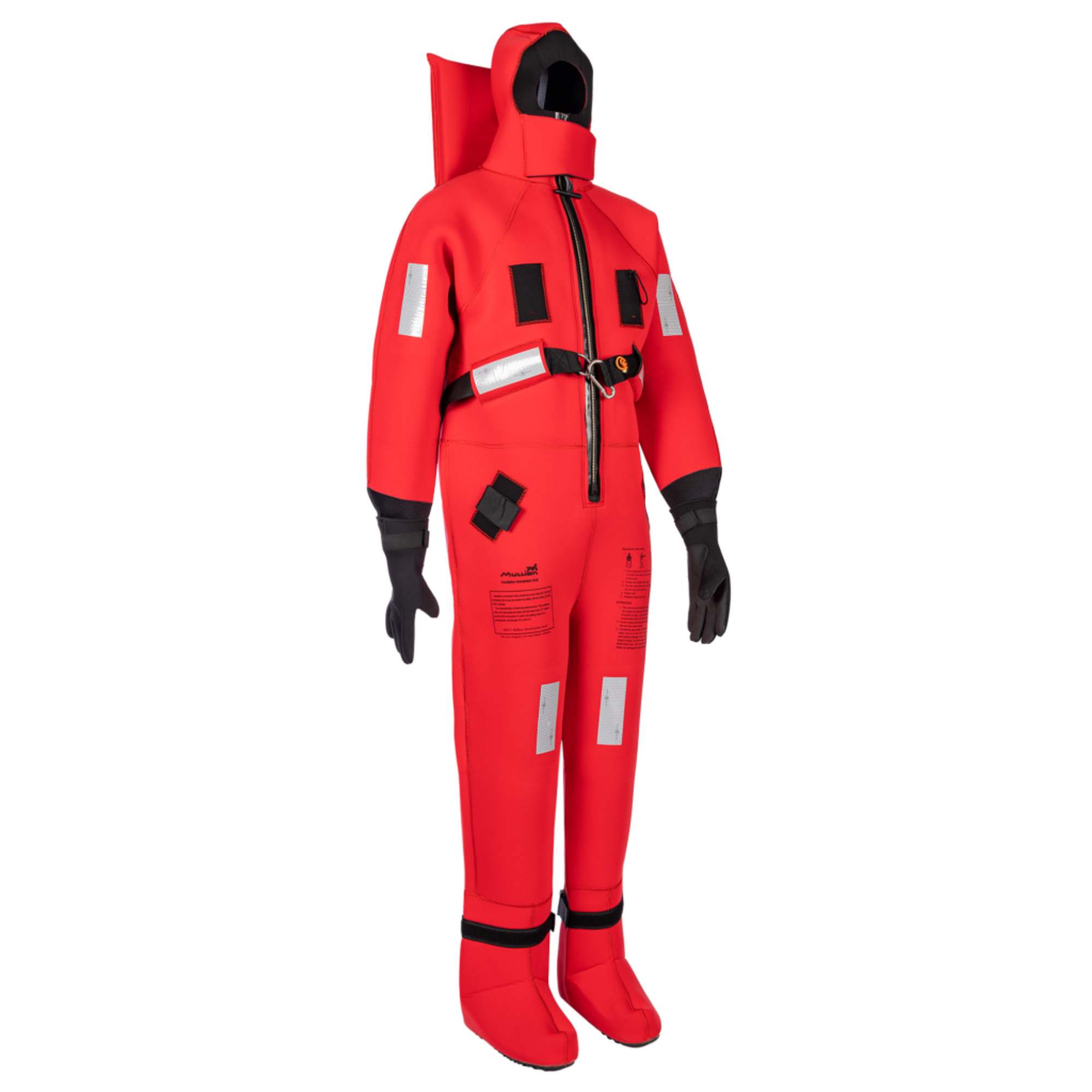
he Mullion MAS I is a professional SOLAS-approved abandonment suit designed for maritime emergency situations where reliable protection against cold water and hypothermia is essential. Constructed from 5 mm neoprene, the suit provides a minimum of 6 hours of thermal protection against cold-water shock and hypothermia following immersion.
Designed to be worn without a lifejacket, the MAS I provides an integrated solution for emergency abandonment and immersion protection. Its neoprene construction helps reduce heat loss in cold water, while the close-fitting design and integrated features provide additional protection and support during an emergency.
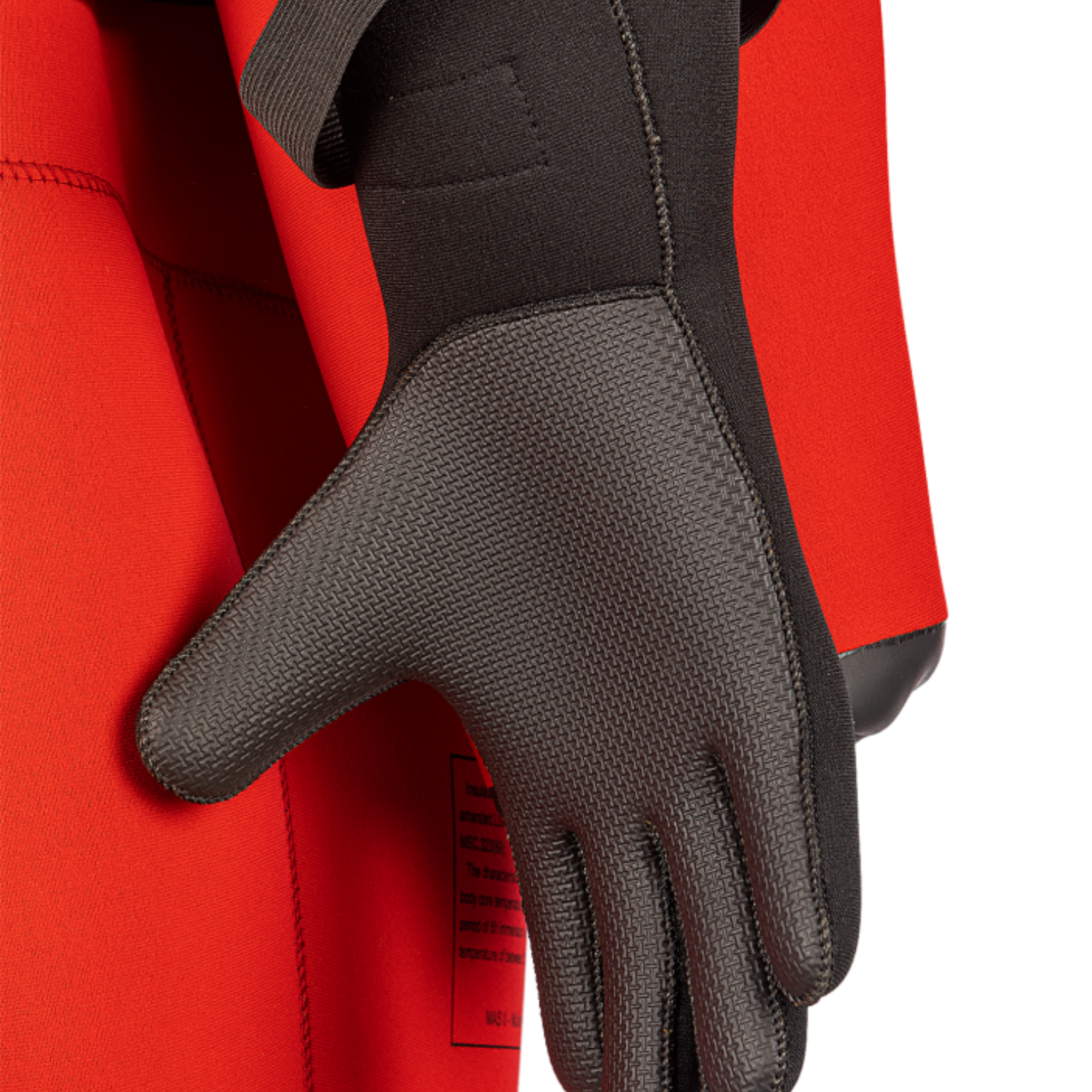
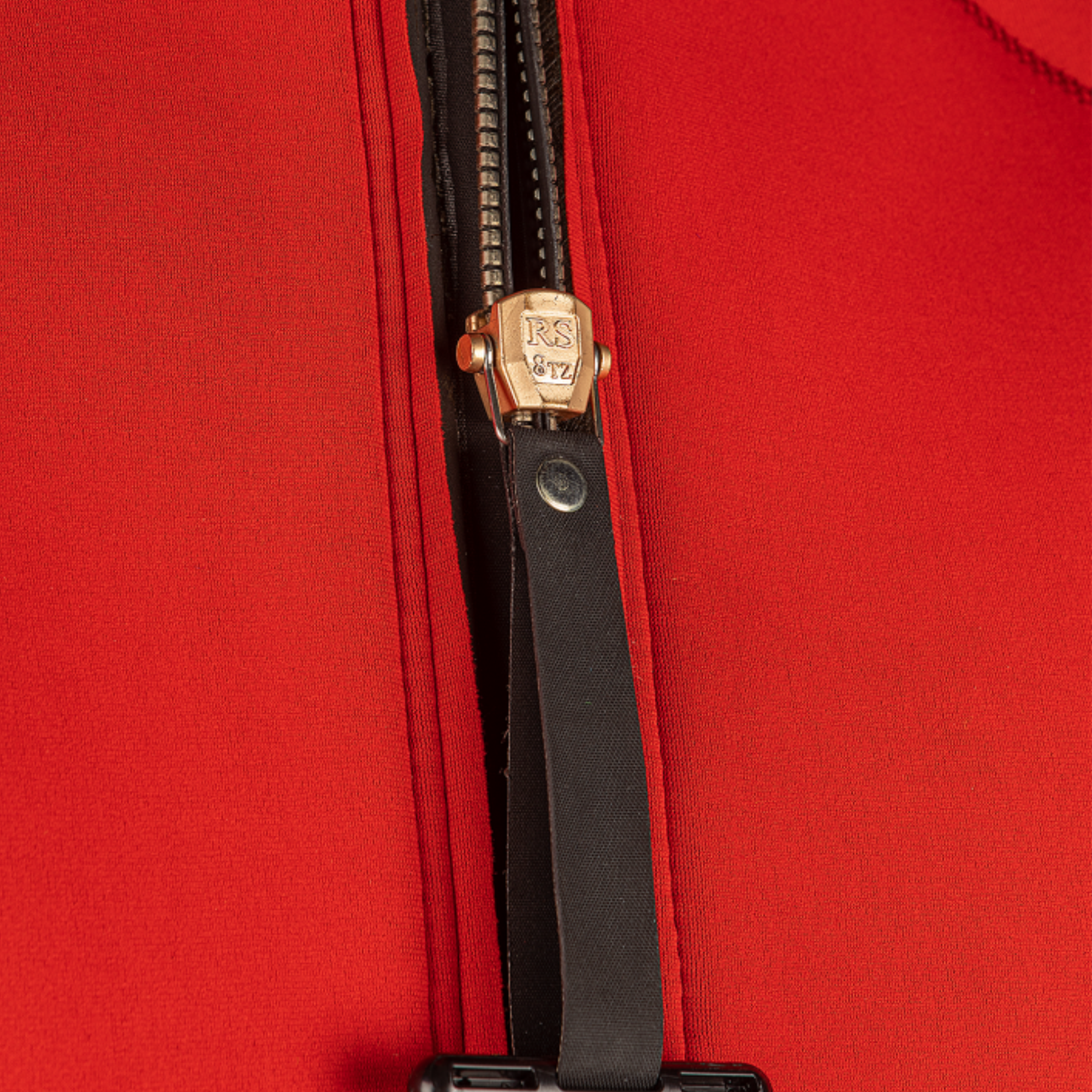
The suit features a hood with a Velcro face seal and a waterproof zipper to help prevent water from entering the suit. Neoprene wrist seals and separate five-finger neoprene gloves provide additional protection for the hands and wrists while maintaining practical functionality.
For improved visibility during rescue operations, the MAS I incorporates SOLAS-approved retro-reflective tape. An automatic water-activated SOLAS SOS light is stored in the chest pocket, while a marine-grade whistle provides an additional means of attracting attention in an emergency.
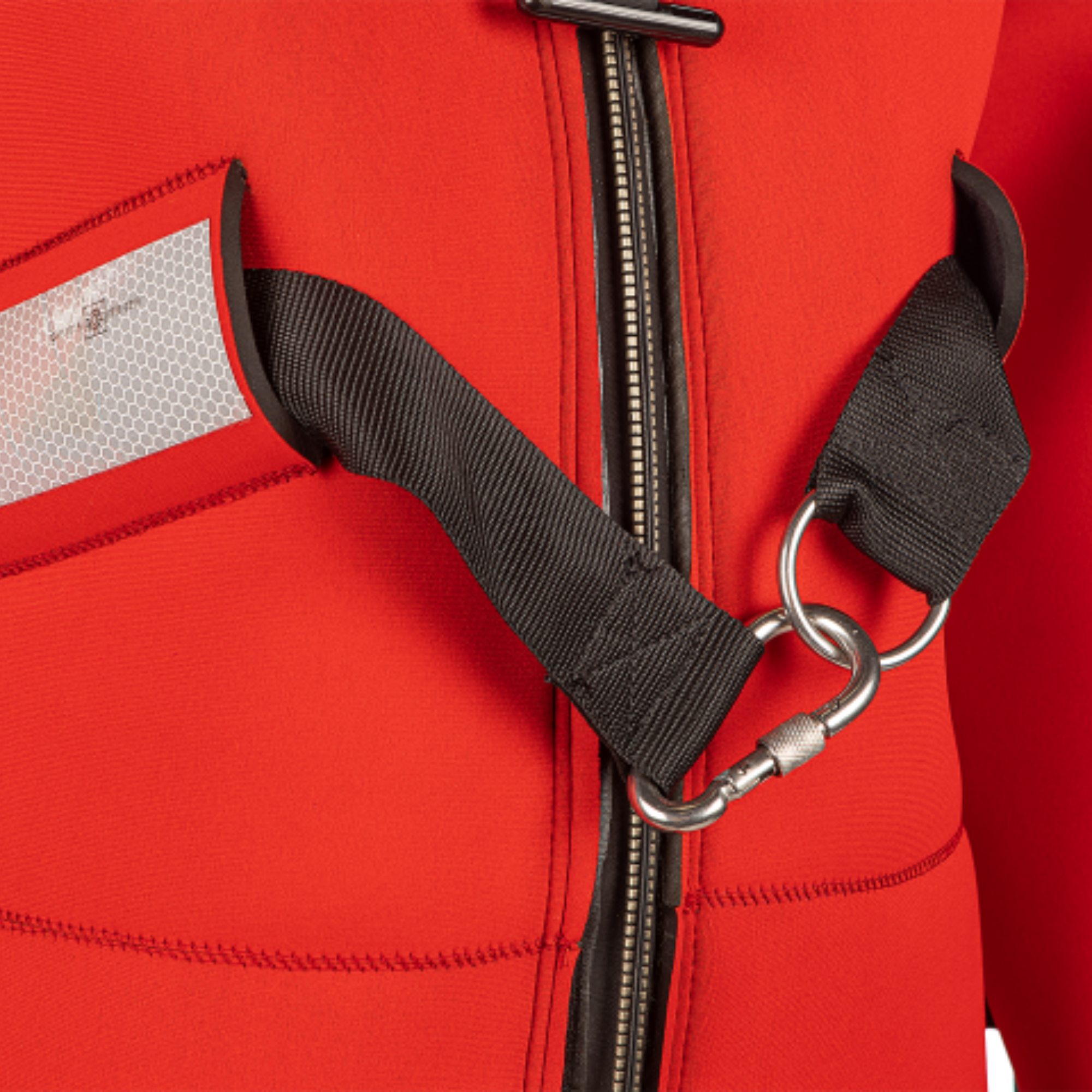
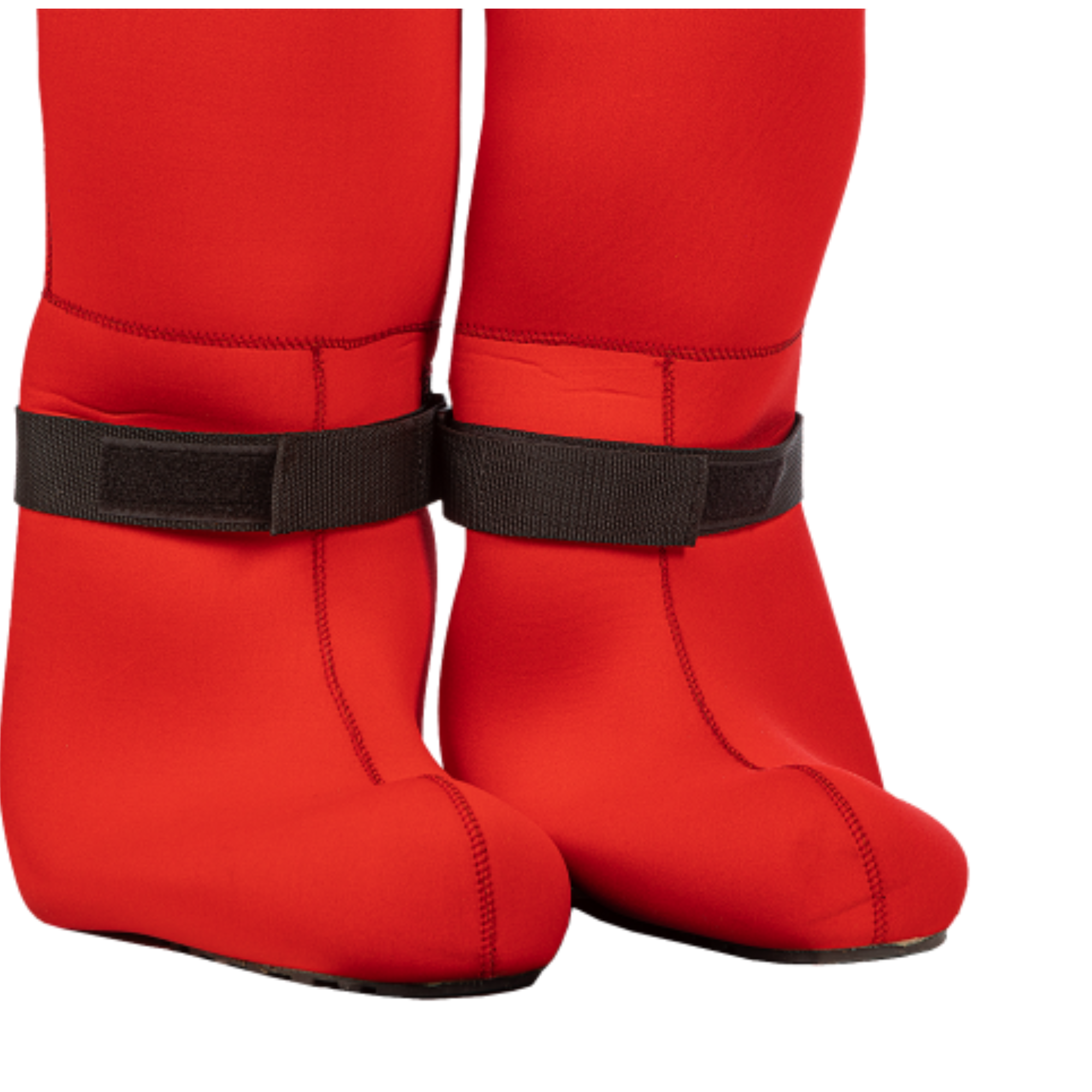
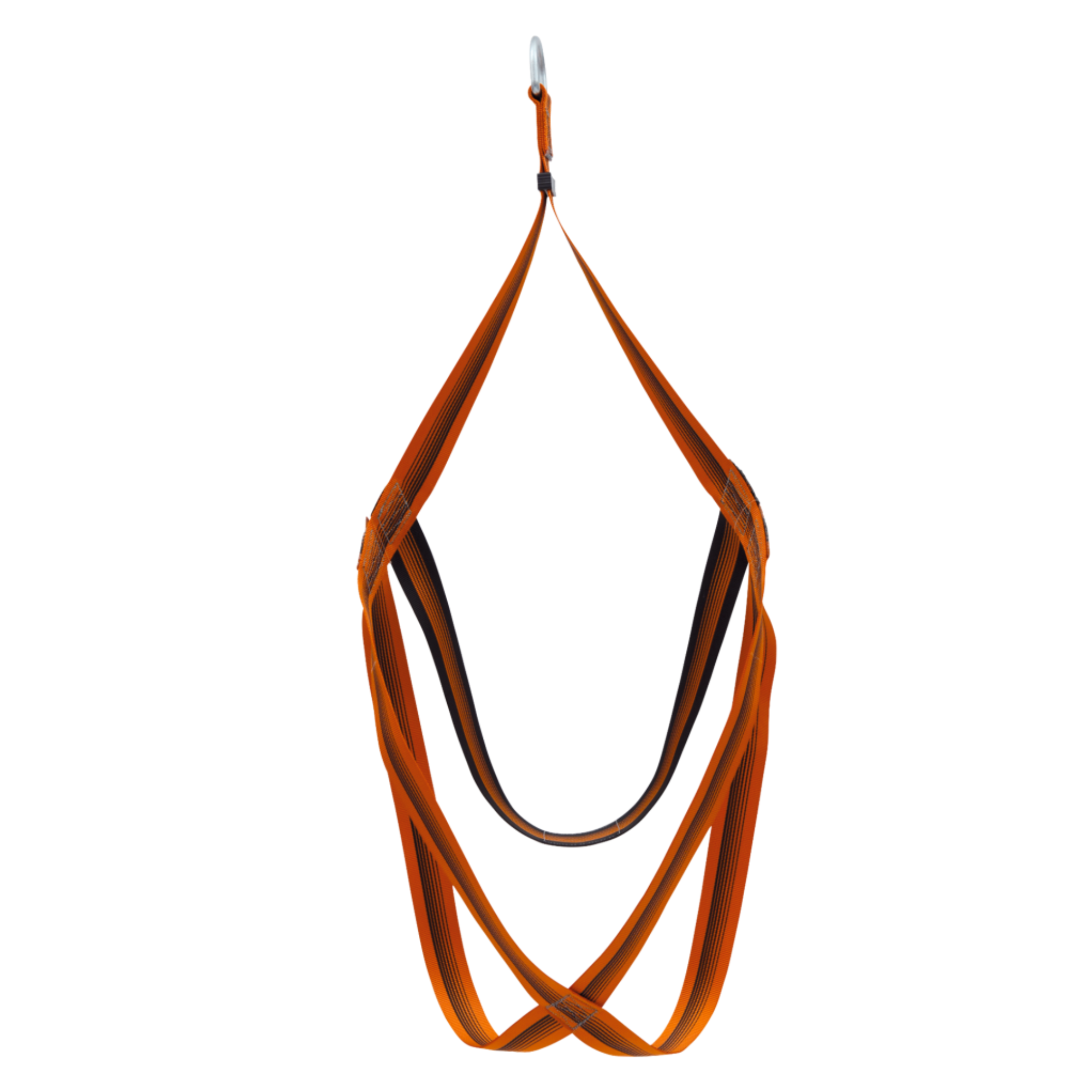
The suit also incorporates a black webbing lifting strop with a steel buckle and D-ring, allowing the wearer to be lifted from the water during rescue operations. An integrated attachment system allows a descent harness to be connected when required. An adjustable ankle strap helps secure the suit around the lower leg.
For practical storage aboard vessels, the MAS I is supplied packed in an airtight bag, helping to reduce storage space while keeping the suit protected and ready for use.
The Mullion MAS I is certified to SOLAS and Red Ensign requirements and is available in sizes S–XL. With its combination of thermal protection, flotation-independent design, visibility features and integrated rescue equipment, it is well suited to commercial shipping and other professional maritime environments where emergency abandonment and cold-water survival are critical considerations.